In 2026, the business case for addressing open office distraction has moved from the realm of employee comfort into the domain of financial performance. Organizations that have measured the productivity impact of uncontrolled workplace noise and visual distraction are finding that the cost — in lost focus time, reduced output quality, increased error rates, and accelerating employee burnout — is not a minor inconvenience. It is a recurring, compounding drain on the human capital investment that represents the largest line item on most companies' operating budgets.
The specific mechanism is well understood. Open-plan offices create a continuous stream of near-field distractions — nearby conversations, phone calls, keyboard activity, visual movement, and the general awareness of being observed — that fragment the sustained concentration required for complex knowledge work. Employees in high-distraction environments spend a disproportionate amount of their working day in reactive, interrupted mode rather than in the deep, focused work that generates the highest-value output. The result is a workplace that looks collaborative but performs below its potential.
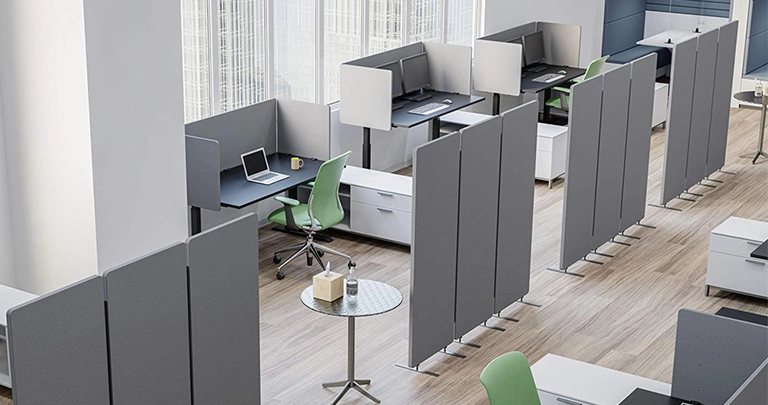
Acoustic desk dividers address this problem at the workstation level — where the distraction actually occurs. By creating both a visual and acoustic boundary around each employee's immediate work zone, acoustic desk dividers reduce the near-field noise and visual interruptions that fragment concentration, without requiring major renovation, structural changes, or significant disruption to the existing office layout. For facility managers and procurement teams comparing modern desk sound dividers, Acousound offers adjustable, portable acoustic desk divider solutions designed to reduce noise, improve privacy, and support more productive open-plan workspaces across a range of workstation configurations and office design styles.
This guide covers the complete picture for workplace decision-makers: why open office distraction has become a measurable productivity and profit issue in 2026, how acoustic desk dividers create a dual visual and acoustic boundary that supports deep work, what design components determine performance and suitability, how desk dividers compare to other office privacy screens and acoustic solutions, and what procurement and maintenance practices ensure long-term value. Secondary keywords relevant to this decision — office privacy screens, sound absorbing desk dividers, acoustic desk partitions for focus, and workplace productivity solutions — are addressed throughout.
The starting point for understanding why acoustic desk dividers have become a mainstream workplace investment in 2026 is a clear picture of what continuous distraction actually costs — and why the open office design philosophy, despite its genuine collaboration benefits, has created a structural productivity problem that furniture and layout alone cannot solve.
Knowledge work — the analytical, creative, and strategic work that generates the highest organizational value — requires sustained, uninterrupted concentration. Cognitive science research consistently shows that complex problem-solving, writing, coding, financial analysis, and strategic planning all depend on the ability to maintain focus for extended periods without interruption. When that focus is broken — by a nearby conversation, a colleague walking past, a phone call from the adjacent desk, or simply the awareness of activity in the peripheral visual field — the cognitive cost of re-establishing concentration is significantly higher than the duration of the interruption itself. Studies of knowledge worker productivity suggest that a single interruption can require 15 to 25 minutes of recovery time before the worker returns to the same depth of focus they had before the distraction.
In a typical open-plan office, these interruptions occur dozens of times per day. The cumulative effect is a workplace where employees spend a large proportion of their working hours in a state of fragmented, shallow attention — responding to immediate stimuli rather than engaging in the sustained deep work that produces the highest-quality output. For organizations that depend on knowledge worker performance, this fragmentation represents a direct and measurable reduction in the return on their human capital investment.
Not all office noise is equally disruptive. Research on the cognitive impact of workplace noise consistently identifies intelligible speech — conversations that are audible and comprehensible but not directed at the listener — as the most disruptive form of office noise for knowledge workers. The brain's language processing systems respond involuntarily to intelligible speech, allocating cognitive resources to processing the content even when the listener is actively trying to ignore it. This involuntary attention capture is what makes a nearby phone call or desk conversation so much more disruptive than an equivalent level of non-speech background noise.
Near-field distraction — the noise and visual activity that originates within a few meters of the employee's workstation — is the most intense form of this problem. A colleague speaking on the phone at the adjacent desk, a team discussion happening directly across the workspace, or the visual movement of people passing within the employee's immediate field of view all create distraction signals that are strong enough to break concentration repeatedly throughout the working day.
Acoustic desk partitions for focus address this near-field distraction problem directly. By placing a sound-absorbing barrier between the employee and the primary sources of near-field distraction, desk sound dividers reduce the intensity of the speech noise that reaches the employee's ears and block the visual stimuli that trigger involuntary attention shifts — creating a personal work zone that supports sustained concentration without requiring the employee to relocate to a separate quiet room.
The commercial framing that is driving adoption of acoustic desk dividers in 2026 is the recognition that they are not office accessories — they are workplace productivity solutions with a measurable return on investment. When the cost of distraction-driven productivity loss is quantified — in terms of reduced output, increased error rates, longer task completion times, and the talent retention cost of employees who leave because they cannot do their best work in the office environment — the investment in acoustic desk dividers becomes straightforward to justify against the financial benefit.
Understanding the mechanism by which acoustic desk dividers reduce distraction — and why the combination of visual and acoustic boundary creation is more effective than either alone — helps buyers evaluate desk divider specifications against the actual distraction problems in their office environment.
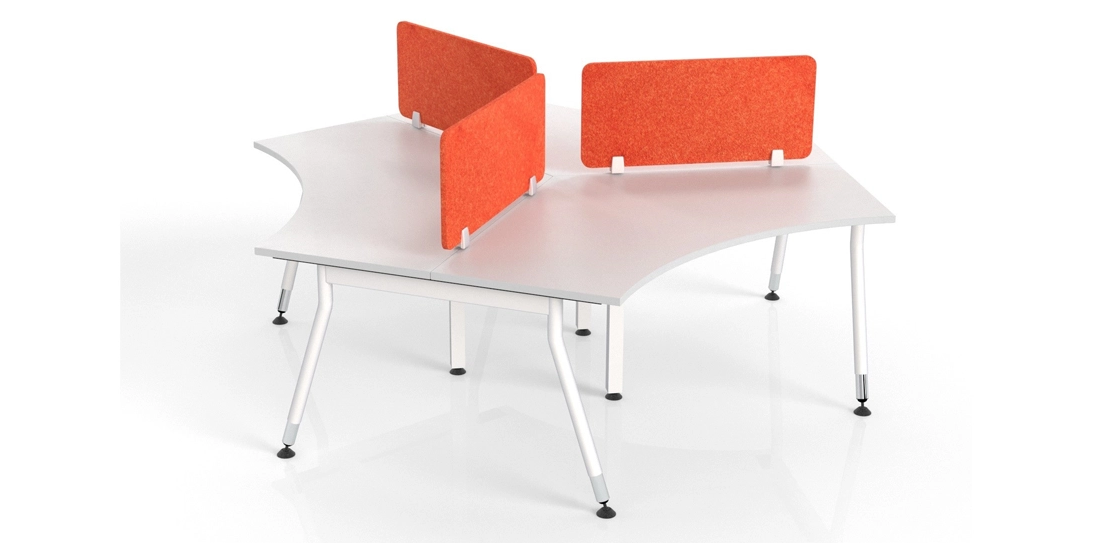
Acoustic desk dividers create distraction reduction through three complementary mechanisms that work together to support sustained concentration:
The acoustic boundary is the primary functional mechanism of a sound absorbing desk divider. The panel's acoustic material — PET polyester fiber, compressed wool, foam, or fabric-wrapped acoustic core — absorbs a portion of the sound energy from nearby speech, keyboard activity, and general workstation noise before it reaches the employee's ears. This absorption reduces the intensity of near-field speech noise, making nearby conversations less intelligible and therefore less cognitively disruptive. The acoustic boundary does not eliminate all noise — desk sound dividers are not soundproofing devices — but they reduce the near-field noise level enough to meaningfully reduce the frequency and intensity of involuntary attention capture.
The visual boundary addresses the second major category of open office distraction: visual interruptions from movement, activity, and the general awareness of being observed. When a desk divider blocks part of the employee's peripheral visual field, it reduces the number of visual stimuli that trigger involuntary attention shifts — the glance toward a colleague walking past, the awareness of a meeting happening across the room, the visual distraction of a nearby screen or whiteboard. This visual boundary effect is particularly important for employees who are sensitive to visual distraction or who work in high-traffic areas of the office.
The psychological boundary is the third and often underestimated mechanism. A defined personal work zone — even one created by a relatively modest desk panel — creates a sense of personal space and psychological ownership that reduces the ambient stress of working in a high-density shared environment. Employees with a defined workstation boundary report feeling more in control of their work environment, more comfortable making phone calls or having sensitive conversations, and more able to signal to colleagues that they are in a focused work mode and prefer not to be interrupted.
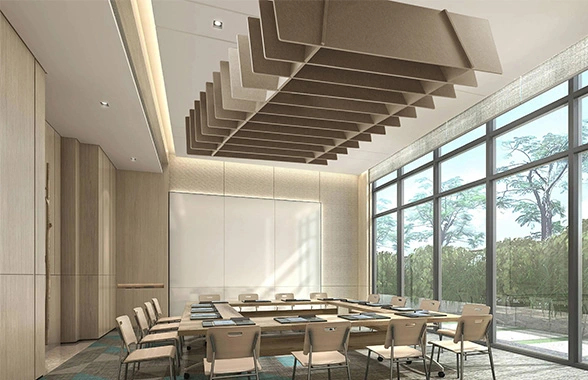
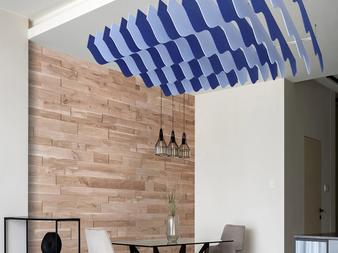
Acoustic desk partitions for focus address a different layer of the office acoustic problem than ceiling baffles, wall panels, or other room-level acoustic treatments. Room-level treatments reduce the overall reverberation time of the space — the persistence of reflected sound that makes the general noise level feel high and speech intelligibility poor. Desk-level treatments reduce the direct sound path between adjacent workstations — the near-field noise that is the primary source of speech distraction for individual employees.
Both layers of treatment are valuable, and they are complementary rather than competing. An office with good room-level acoustic treatment but no desk-level boundaries will have a comfortable general acoustic environment but may still suffer from near-field speech distraction between adjacent employees. An office with desk sound dividers but poor room-level acoustics will have reduced near-field distraction but may still feel noisy and reverberant in the general environment. The most effective approach combines both layers — room-level treatment to control reverberation and desk-level treatment to manage near-field distraction.
A successful acoustic desk divider installation requires matching the design components — material, height, thickness, shape, mounting method, and visual finish — to the specific acoustic requirements, workstation configuration, and design intent of the office environment. Understanding what each component contributes helps buyers specify desk sound dividers that deliver the performance they need while supporting the visual quality of the workplace.
The acoustic performance of a desk divider is determined primarily by the material composition and density of its absorbing core. Common materials include PET polyester fiber, compressed wool felt, open-cell acoustic foam, and fabric-wrapped fiberglass or mineral wool — each with different absorption characteristics, weight, durability, and sustainability profiles.
PET polyester acoustic materials offer a combination of good broadband absorption, lightweight handling, durability, and environmental credentials — PET acoustic products are typically made from recycled content and are themselves recyclable at end of life. Acousound's acoustic desk divider range includes PET acoustic desk screens, fabric-wrapped acoustic desk screens, and U-shape acoustic desk screens, providing buyers with options that match different performance requirements, aesthetic preferences, and workstation configurations. The availability of customization in color, size, and shape allows the desk dividers to be specified as an integrated element of the office interior design rather than a functional add-on.
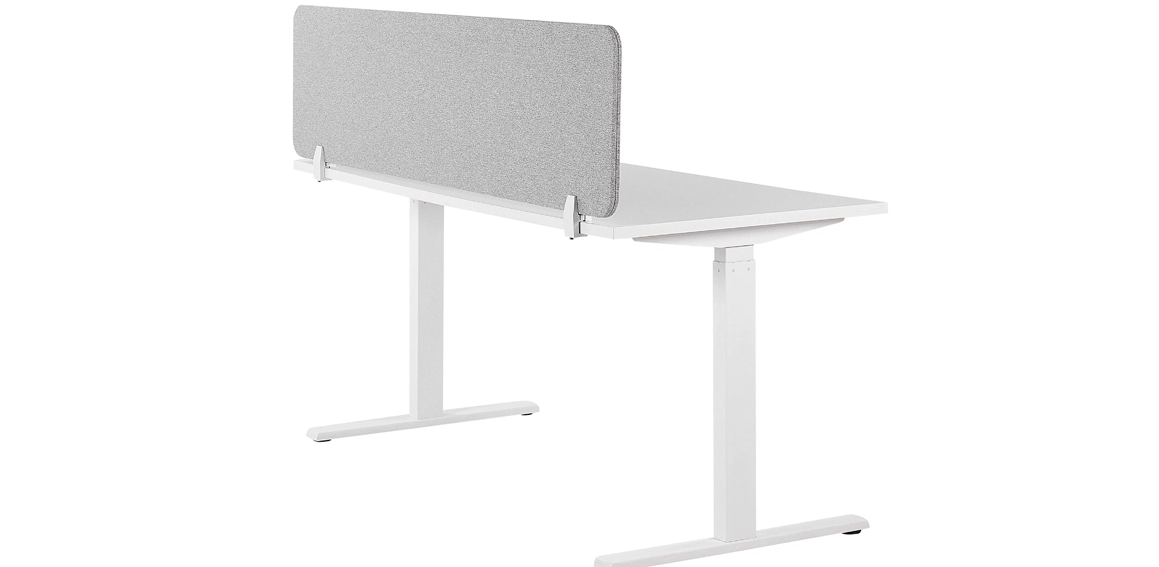
Panel height is one of the most important design decisions for acoustic desk partitions for focus. A panel that is too low provides limited visual privacy and minimal acoustic benefit for standing or tall-seated employees. A panel that is too high can create a sense of isolation, block natural light, impede communication between team members, and make the office feel fragmented. The optimal height depends on the specific distraction problem being addressed — a panel height of 400 to 600 millimeters above the desk surface is typically sufficient to block the primary visual distraction zone while maintaining a sense of openness and team connection.
Panel thickness affects both acoustic performance and physical durability. Thicker panels generally provide better low-frequency absorption and are more resistant to physical damage in high-use environments. For most open office applications, a panel thickness of 25 to 50 millimeters provides adequate acoustic performance for near-field speech noise reduction.
Panel shape — straight front panels, side panels, wraparound configurations, or U-shape enclosures — should be selected based on the primary distraction direction and the workstation layout. Front panels address distraction from directly across the desk. Side panels address distraction from adjacent workstations. U-shape configurations provide the most comprehensive near-field boundary for employees who need maximum focus protection in high-density environments.
| Component | Why It Matters | Selection Guidance |
|---|---|---|
| Acoustic material | Determines sound absorption performance and sustainability | PET polyester, compressed wool, foam, or fabric-wrapped acoustic core |
| Panel height | Affects both sound control and visual privacy | High enough to reduce distraction, low enough to maintain openness |
| Panel thickness | Influences absorption performance and durability | Thicker panels improve low-frequency absorption |
| Shape and configuration | Impacts workstation layout and distraction direction coverage | Straight, side, wraparound, or U-shape based on desk layout |
| Mounting method | Affects stability and flexibility | Clamp-on, freestanding, or modular systems for different desk types |
| Color and finish | Supports office branding and interior design | Acousound offers customization options for design integration |
| Reconfiguration ability | Important for flexible and hot-desk offices | Select movable panels for teams that change layouts frequently |
Different acoustic and privacy solutions address different layers of the open office distraction problem. Acoustic desk dividers are the most effective solution for near-field workstation distraction, but they work best as part of a layered approach that also addresses room-level acoustics and zone-level privacy.
Acoustic desk dividers — near-field workstation boundary
Acoustic desk dividers are the most targeted solution for the near-field speech noise and visual distraction that are the primary productivity disruptors for individual knowledge workers. They create a personal work zone at the workstation level, reducing the intensity of nearby conversations, blocking peripheral visual distractions, and providing the psychological boundary that supports sustained concentration. Their desk-mounted or freestanding installation requires no structural changes, no ceiling access, and minimal installation time — making them one of the most practical and low-disruption workplace productivity solutions available. Their primary limitation is that they address near-field distraction rather than whole-room reverberation — they are most effective when combined with room-level acoustic treatment.
Wall acoustic panels — enclosed space treatment
Wall panels are effective for improving speech clarity and reducing reverberation in meeting rooms, focus rooms, and enclosed offices. They do not create personal workstation boundaries and have limited effect on the near-field distraction experienced by employees in open workstation areas. They are best used as a complement to desk-level treatment rather than as a substitute for it.
Ceiling acoustic baffles — whole-room reverberation control
Ceiling baffles address the whole-room acoustic environment by increasing the total sound-absorbing surface area of the space, reducing reverberation time, and improving general speech intelligibility. They are highly effective for improving the overall acoustic comfort of large open offices but do not create personal workstation boundaries or address near-field distraction between adjacent employees. They are the ideal complement to acoustic desk dividers — ceiling baffles improve the room-level acoustic environment while desk dividers address the workstation-level distraction problem.
Standard office screens — visual privacy only
Standard office screens without acoustic material provide visual separation between workstations but offer minimal sound absorption. They may reduce visual distraction but do not address the near-field speech noise that is the primary cognitive disruptor for knowledge workers. For organizations that need both visual and acoustic boundary creation, sound absorbing desk dividers provide significantly better value than standard non-acoustic screens.
| Solution | Best Application | Primary Advantage | Key Limitation |
|---|---|---|---|
| Acoustic desk dividers | Individual workstations, team desks, call areas | Near-field noise reduction, visual privacy, easy installation | Not a complete room soundproofing solution |
| Wall acoustic panels | Meeting rooms, enclosed offices, shared walls | Room-level sound absorption improvement | Limited effect on desk-level visual privacy |
| Ceiling acoustic baffles | Large open areas, high ceilings, whole-room treatment | Reduces overall reverberation and general noise level | Does not create personal workstation boundaries |
| Freestanding partitions | Flexible zones, temporary office layouts | Can divide larger areas and create team zones | May require more floor space |
| Standard office screens | Visual privacy only, low-budget applications | Low cost and simple installation | Minimal acoustic absorption without sound-absorbing material |
Acoustic desk partitions for focus are most valuable in environments where high employee density, near-field speech noise, and the need for individual concentration coexist: technology company open-plan offices where developers and analysts need sustained focus, financial services environments where sensitive conversations and complex analysis occur in shared spaces, call center and customer service environments where near-field speech noise is intense and continuous, legal and professional services offices where confidentiality and concentration are both critical, co-working spaces where diverse users share open workstation areas, and educational institution administrative offices where staff need to balance collaboration with focused individual work.
Specifying and procuring acoustic desk dividers that deliver measurable productivity improvement — and that maintain their performance and appearance over the long term — requires systematic planning before purchase and consistent maintenance practices afterward.
Before selecting acoustic desk dividers for an office project, facility managers and procurement teams should confirm the following:
Define the primary distraction problem: near-field speech noise, visual interruptions, lack of perceived privacy, or a combination of all three — different problems may favor different panel configurations
Count the number of workstations that need treatment and identify the highest-priority zones — call areas, high-density workstation clusters, and areas adjacent to meeting rooms typically benefit most
Confirm the desk configuration: fixed desks, shared hot-desks, modular benching systems, or individual workstations — mounting method and panel size must be compatible with the desk type
Determine the appropriate panel height for the specific distraction problem and the desired balance between focus support and team openness
Decide whether front panels, side panels, or U-shape configurations are most appropriate for the primary distraction direction at each workstation type
Confirm material preference — PET polyester for sustainability and lightweight handling, fabric-wrapped for premium aesthetics, or other acoustic materials for specific performance requirements
Select colors and finishes that integrate with the office interior design — Acousound offers customization options for color, size, and shape
Confirm whether eco-friendly or recycled-content materials are required for sustainability certification or corporate environmental commitments
Verify compatibility between the selected desk sound dividers and existing desk hardware, monitor arms, cable management systems, and power modules
Confirm whether the panels need to be reconfigurable for flexible or hot-desk environments — select modular or freestanding options if layout changes are anticipated
Request acoustic performance data from the supplier — absorption coefficient values across the frequency range — to confirm that the selected panel will deliver the near-field noise reduction required
Converting acoustic desk divider procurement from a facility expense into a measurable workplace productivity investment requires tracking performance metrics before and after installation:
Employee focus satisfaction scores from workplace experience surveys — before installation and at three-month and six-month intervals after installation
Self-reported interruption frequency — how often employees feel their concentration is broken by near-field noise or visual distraction
Perceived privacy scores — employee assessment of their ability to have sensitive conversations and focused work sessions at their workstation
Noise complaint frequency — the number of noise-related complaints or requests for quiet space before and after installation
Desk occupancy satisfaction — employee preference for working at their assigned workstation versus seeking alternative quiet spaces
Task completion quality feedback — manager and employee assessment of output quality in roles that require sustained concentration
Dust acoustic desk dividers regularly using a soft brush or vacuum with a brush attachment — dust accumulation on the panel surface can reduce absorption performance and affect appearance over time
Clean fabric-wrapped surfaces according to the supplier's specific guidance — most fabric acoustic surfaces can be spot-cleaned with a damp cloth but should not be saturated with water or liquid cleaning agents
Inspect clamps, brackets, mounting hardware, and connection points at regular intervals — particularly after desk reconfigurations or office moves that may have stressed the mounting components
Replace panels that are visibly damaged, structurally compromised, or heavily stained — damaged panels may have reduced acoustic performance and can affect the visual quality of the workplace environment
Keep panels away from sharp objects, harsh chemicals, and direct contact with heat sources that could degrade the acoustic material
Recheck the desk divider layout after office reconfigurations, team restructuring, or changes in workstation density — a layout that was adequate for the original configuration may need adjustment if the office is reorganized
Maintain product records including panel specifications, color codes, and supplier information for future matching when additional panels are needed or damaged panels require replacement
Acousound notes that acoustic desk dividers can be customized in color, size, and shape and reconfigured easily for changing office layouts — keep this flexibility in mind when planning future office changes
In 2026, the organizations that are most effectively protecting their knowledge worker productivity are the ones that have recognized near-field workstation distraction for what it is: a structural, recurring, and measurable drag on the human capital investment that drives their business performance. Acoustic desk dividers provide a practical, design-compatible, and commercially scalable solution to this problem — creating the dual visual and acoustic boundary that supports deep work, reduces near-field speech noise, improves perceived privacy, and gives employees the personal work zone they need to perform at their best in open-plan environments.
For businesses seeking smarter desk sound dividers that function as genuine workplace productivity solutions rather than decorative accessories, Acousound provides acoustic office partition solutions designed for modern workplaces — including PET acoustic desk screens, fabric-wrapped acoustic desk screens, and U-shape acoustic desk screens that support noise reduction, visual privacy, flexible layout changes, and customized interior design across a wide range of open office configurations.
Contact Acousound today to discuss your office layout, workstation density, primary distraction challenges, and design goals. The Acousound team can help you identify the right acoustic desk divider configuration for your specific workplace, provide acoustic performance data to support your procurement decision, and recommend a complete workstation acoustic strategy that turns your desk divider investment into a measurable productivity outcome.
Q1: What are acoustic desk dividers and how do they differ from standard office screens?
Acoustic desk dividers are desk-mounted or freestanding partitions made from sound-absorbing materials — such as PET polyester fiber, compressed wool, or fabric-wrapped acoustic core — that create both a visual and acoustic boundary around individual workstations. Unlike standard office screens, which provide visual separation but offer minimal sound absorption, acoustic desk dividers absorb a portion of the near-field speech noise and general workstation activity noise that reaches the employee's ears, reducing the cognitive disruption caused by nearby conversations and keyboard activity. This dual visual and acoustic boundary effect makes them significantly more effective as workplace productivity solutions than non-acoustic screens.
Q2: Do desk sound dividers fully soundproof a workstation?
No. Desk sound dividers are not soundproofing devices and do not eliminate all noise from the surrounding office environment. They reduce the intensity of near-field noise — the speech, keyboard activity, and general workstation sounds that originate within a few meters of the employee — by absorbing a portion of the direct sound energy before it reaches the employee's ears. This reduction in near-field noise intensity is sufficient to meaningfully reduce the frequency of involuntary attention capture and improve sustained concentration, but employees in open offices will still be aware of the general ambient noise level of the space. For complete acoustic isolation, enclosed rooms or phone booths are required.
Q3: How do acoustic desk dividers improve employee productivity and focus?
Acoustic desk dividers improve productivity and focus through three complementary mechanisms: the acoustic boundary reduces the intensity of near-field speech noise, making nearby conversations less intelligible and therefore less cognitively disruptive; the visual boundary blocks peripheral visual distractions from movement and activity in the surrounding office; and the psychological boundary creates a sense of personal space and work zone ownership that reduces ambient stress and supports a focused work mindset. Together, these three effects reduce the frequency and intensity of distraction events that fragment concentration, allowing employees to spend more of their working time in the sustained deep work mode that generates the highest-quality output.
Q4: What types of workplaces benefit most from acoustic desk partitions for focus?
Acoustic desk partitions for focus deliver the most value in environments where high employee density, near-field speech noise, and the need for individual concentration coexist. Technology company open-plan offices, financial services environments, call center and customer service areas, legal and professional services offices, co-working spaces, and educational institution administrative offices all benefit significantly from desk-level acoustic boundary creation. Any workplace where employees need to balance collaboration with sustained individual focus — and where the open-plan layout creates near-field distraction that fragments concentration — is a strong candidate for acoustic desk divider installation.
Q5: What should buyers consider when selecting acoustic desk dividers for an open office?
Buyers should consider the primary distraction problem — near-field speech noise, visual interruptions, or both — and select panel configuration accordingly. Panel height should balance focus support with team openness. Material selection should match acoustic performance requirements, sustainability preferences, and aesthetic goals. Mounting method must be compatible with the existing desk type and hardware. Color and finish should integrate with the office interior design — Acousound offers customization options for color, size, and shape. Reconfiguration flexibility is important for hot-desk and flexible office environments. And acoustic performance data — absorption coefficient values across the frequency range — should be requested from the supplier to confirm that the selected panel will deliver the near-field noise reduction required for the specific workplace application.