Healthcare facility design has evolved significantly over the past decade.
Modern hospitals are no longer evaluated solely on medical capabilities. Patient experience, staff well-being, operational efficiency, and overall environmental quality have become increasingly important considerations during facility planning and renovation projects.
As healthcare providers strive to create more patient-centered environments, acoustics has emerged as one of the most overlooked yet influential aspects of building performance.
While lighting, ventilation, and interior finishes often receive significant attention, excessive noise remains a common challenge across hospitals, clinics, outpatient centers, and long-term care facilities.
For patients, noise can affect comfort, rest, and recovery. For healthcare professionals, it can contribute to stress, fatigue, and communication challenges.
As a result, acoustic panels are becoming an increasingly important component of modern healthcare facility design.
Healthcare facilities are among the most acoustically complex buildings in operation today.
Unlike traditional office environments, hospitals function around the clock and support a wide variety of activities simultaneously.
Patient consultations, emergency response activities, equipment alarms, staff communications, visitor interactions, and routine medical procedures all contribute to a constantly changing sound environment.
In many facilities, hard surfaces such as vinyl flooring, glass partitions, concrete structures, and washable wall finishes amplify sound reflection.
These materials are often selected for durability and infection control purposes, but they can create environments where noise travels easily throughout the building.
Over time, excessive noise can affect both patient experience and workplace performance.
This challenge has encouraged architects and healthcare planners to place greater emphasis on acoustic design during project development.
Patients may not consciously evaluate a hospital's acoustic design, but they immediately notice the effects of noise.
Sleep disruption is one of the most common complaints reported by hospital patients.
Frequent interruptions caused by conversations, equipment sounds, corridor activity, and general background noise can negatively affect rest and recovery.
Research has consistently shown that quieter healthcare environments contribute to improved patient satisfaction and a more positive overall experience.
As healthcare organizations increasingly measure patient-centered outcomes, environmental comfort has become an important factor in facility performance.
Acoustic panels help support these objectives by reducing reverberation and controlling unwanted noise within patient care areas.
Clear communication is critical in healthcare settings.
Doctors, nurses, technicians, and support staff rely on accurate verbal communication throughout the day.
When excessive background noise interferes with conversations, the risk of misunderstandings increases.
This can affect everything from routine patient interactions to complex clinical discussions.
Acoustic treatments help improve speech intelligibility by reducing sound reflections and minimizing competing background noise.
As a result, healthcare professionals can communicate more effectively while maintaining a more comfortable working environment.
For busy hospitals and clinics, these improvements can contribute to both operational efficiency and patient safety.
Privacy remains a major consideration in healthcare design.
Patients expect sensitive medical information to be handled confidentially, and healthcare facilities must comply with privacy regulations and best practices.
However, conversations can easily travel through corridors, waiting areas, consultation rooms, and shared treatment spaces when acoustics are poorly managed.
Acoustic wall panels help absorb sound and reduce speech transmission between adjacent spaces.
By improving acoustic separation, healthcare facilities can create environments that better support confidential conversations while enhancing patient trust.
This has become increasingly important as healthcare providers seek to improve both compliance and patient experience.
Acoustic treatments can provide benefits throughout an entire healthcare facility.
Patient rooms often require quieter environments that support rest and recovery.
Waiting areas benefit from reduced noise levels that create a calmer atmosphere for patients and visitors.
Consultation rooms require improved speech privacy and communication clarity.
Administrative offices and staff work areas also benefit from acoustic treatments that reduce distractions and support concentration.
Even corridors and public circulation spaces can experience improved comfort when reverberation is properly controlled.
Because healthcare facilities contain so many different acoustic environments, comprehensive acoustic planning often delivers the greatest results.
Material selection is particularly important in healthcare environments.
Healthcare facilities require products that not only perform acoustically but also support durability, maintenance, and long-term operational requirements.
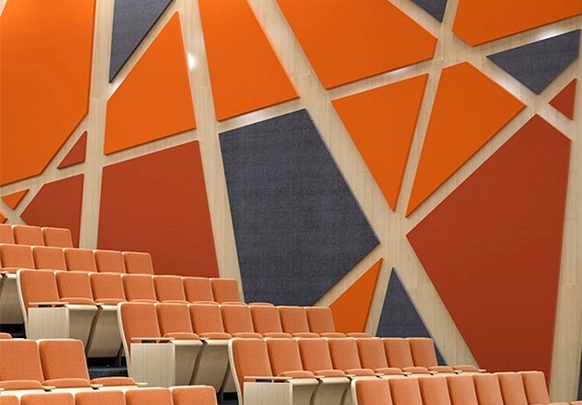
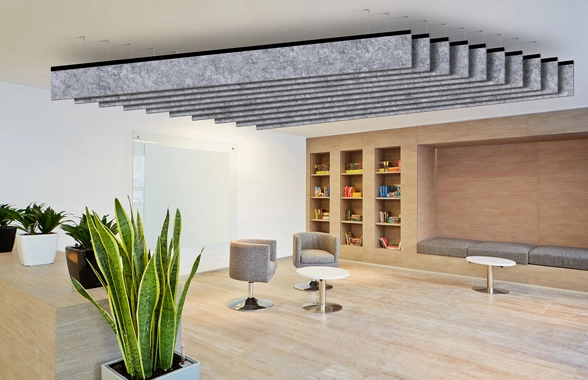
PET acoustic panels have become increasingly popular in healthcare projects because they combine sound absorption with design flexibility and durability.
Their clean appearance allows architects to create welcoming healthcare environments without introducing unnecessary visual complexity.
In addition, many PET acoustic panels are manufactured using recycled materials, helping support sustainability goals that are becoming increasingly important in healthcare construction.
For healthcare providers seeking a balance between performance, aesthetics, and long-term value, PET acoustic panels offer an attractive solution.
Healthcare architecture is increasingly influenced by evidence-based design principles.
Rather than relying solely on aesthetics, design decisions are increasingly supported by research related to patient outcomes, staff performance, and operational effectiveness.
Acoustics is one of the areas receiving growing attention within this approach.
Numerous studies have demonstrated the relationship between environmental noise and patient satisfaction, stress levels, communication effectiveness, and staff well-being.
As healthcare organizations continue investing in better patient experiences, acoustic design is becoming a strategic component of facility planning rather than an optional enhancement.
Healthcare facilities are expected to become more patient-centered, technology-driven, and operationally efficient in the years ahead.
As hospitals evolve, acoustic performance will continue to play an important role in shaping both patient and staff experiences.
Future healthcare environments will likely integrate acoustic solutions more extensively into walls, ceilings, furniture, and architectural finishes.
Rather than treating acoustics as a separate discipline, designers will increasingly incorporate sound management into the overall healthcare experience.
This shift is already influencing healthcare projects around the world and is expected to accelerate as demand for higher-quality care environments continues to grow.
Healthcare facilities face unique acoustic challenges that directly affect patient comfort, communication, privacy, and staff performance.
As hospitals and clinics continue prioritizing patient-centered care, acoustic design is becoming an increasingly important part of facility planning and modernization efforts.
Acoustic panels help create quieter, more comfortable, and more effective healthcare environments by reducing reverberation, improving speech clarity, and supporting privacy requirements.
For healthcare architects, facility managers, contractors, and healthcare providers, investing in acoustic solutions is not simply a design decision. It is an investment in better patient experiences, improved workplace conditions, and long-term facility performance.