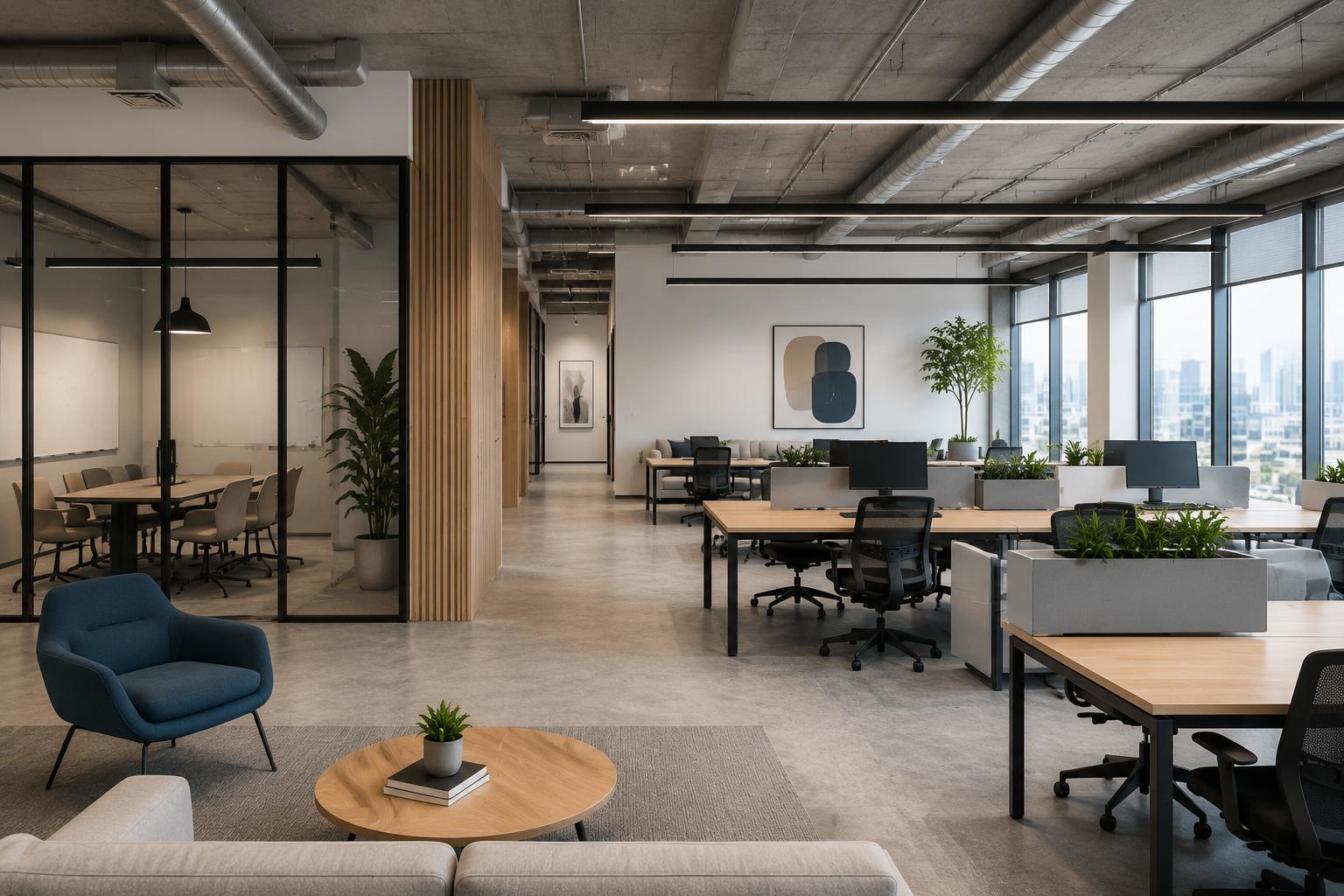
For years, open-plan offices have been promoted as the future of workplace design.
By removing walls and reducing physical barriers, organizations hoped to encourage collaboration, improve communication, and make more efficient use of office space. As a result, open office layouts quickly became the standard across corporate headquarters, technology companies, coworking spaces, and creative workplaces.
However, as more organizations gained experience with open-plan environments, a new challenge emerged.
Noise.
Conversations, phone calls, video meetings, keyboard activity, and general workplace movement all contribute to an environment that can become increasingly difficult to manage as occupancy grows.
While open offices may support collaboration, they can also create distractions that reduce concentration, affect employee satisfaction, and negatively impact productivity.
This is why acoustic solutions are becoming an increasingly important part of modern workplace design.
Many organizations underestimate the impact of noise on employee performance.
Unlike equipment failures or operational disruptions, poor acoustics often develop gradually. Employees become accustomed to background noise and may not immediately recognize its effect on productivity.
However, numerous workplace studies have shown that excessive noise can affect concentration, increase cognitive fatigue, and reduce overall work performance.
In environments where employees regularly participate in phone calls, virtual meetings, analytical tasks, or collaborative discussions, acoustic comfort becomes directly linked to workplace effectiveness.
For employers investing heavily in talent, technology, and office design, failing to address workplace acoustics can undermine many of those investments.
Historically, office design focused primarily on furniture layout, lighting, and space utilization.
Today, employee expectations have changed.
Organizations are increasingly competing to create workplaces that support focus, collaboration, well-being, and flexibility.
The challenge is that modern office environments often incorporate materials that reflect sound rather than absorb it.
Glass meeting rooms, exposed concrete ceilings, polished floors, and minimalist design elements create visually attractive spaces but frequently contribute to acoustic problems.
As companies continue to embrace hybrid working models and collaborative workspaces, these challenges become even more noticeable.
This has created growing demand for integrated acoustic solutions that improve workplace performance without sacrificing design aesthetics.
Rather than treating acoustics as an afterthought, many organizations now consider acoustic performance during the earliest stages of workplace planning.
The objective is not to eliminate all sound.
Healthy workplaces require communication and interaction.
Instead, the goal is to create a balanced environment where employees can collaborate when needed while still having opportunities for focused work.
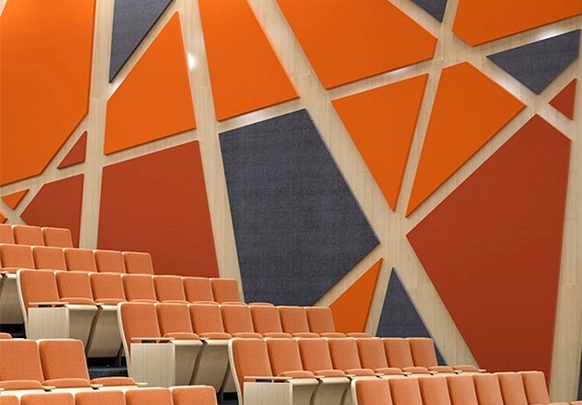
Modern acoustic solutions help organizations achieve this balance by controlling reverberation, reducing background noise, and improving speech privacy.
As a result, acoustics is increasingly viewed as a strategic workplace investment rather than a purely technical requirement.
Among the most effective workplace acoustic solutions are acoustic desk dividers.
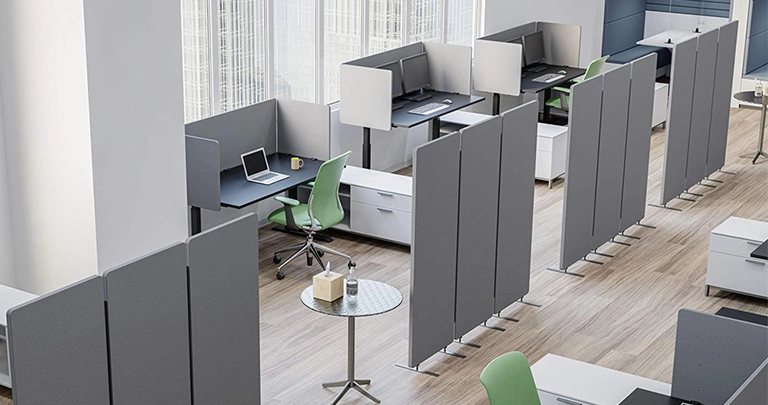
Unlike traditional cubicles, modern desk dividers are designed to provide visual separation while also absorbing sound.
This helps reduce direct speech transmission between workstations and creates a greater sense of privacy within open office environments.
For employees, this often translates into fewer distractions and improved concentration.
For employers, acoustic desk dividers offer a practical way to improve workplace comfort without sacrificing the flexibility and openness that make open-plan offices attractive.
Because they are relatively easy to install and reconfigure, desk dividers are particularly popular in rapidly changing workplace environments.
For many years, organizations moved away from partitions in favor of completely open layouts.
Today, however, many workplace designers are adopting a more balanced approach.
Modern office partitions are no longer viewed as barriers to collaboration. Instead, they are used strategically to create different activity zones within a workplace.
Acoustic office partitions can help separate collaborative spaces from focus areas while maintaining visual openness and flexibility.
This approach allows organizations to support different work styles within a single environment.
As hybrid work becomes more common, flexible acoustic partitions are increasingly helping companies adapt spaces to changing workplace requirements.
Workplace acoustics are closely connected to employee well-being.
Excessive noise can contribute to stress, fatigue, and reduced job satisfaction.
Conversely, well-designed acoustic environments can support concentration, communication, and overall workplace comfort.
Organizations are becoming increasingly aware that workplace design influences employee experience.
As talent retention becomes a growing priority, creating comfortable working environments is no longer simply a design objective—it has become a business objective.
Acoustic solutions play an important role in achieving this goal.
The workplace furniture industry has evolved significantly in recent years.
Employers are no longer selecting furniture based solely on appearance and durability.
Today's procurement teams are evaluating how furniture contributes to employee productivity, comfort, and workplace flexibility.
This trend has fueled demand for acoustic furniture solutions such as:
Acoustic desk dividers
Acoustic office partitions
Acoustic meeting pods
Acoustic room dividers
These products help organizations improve acoustic performance while maintaining adaptable workplace layouts.
For many companies, acoustic furniture provides a cost-effective alternative to major architectural modifications.
Open offices are unlikely to disappear.
However, the future workplace will look different from the completely open environments that became popular during the past decade.
Organizations increasingly recognize that collaboration and concentration must coexist.
Future office designs are expected to incorporate more acoustic zoning, flexible workspace arrangements, and sound-absorbing materials.
Rather than treating acoustics as a problem to solve later, successful workplaces will integrate acoustic planning into the design process from the beginning.
This shift is already influencing how architects, designers, and facility managers approach workplace projects worldwide.
The evolution of open office design has highlighted an important reality: collaboration alone is not enough.
Employees need environments that support communication while also providing opportunities for concentration and focused work.
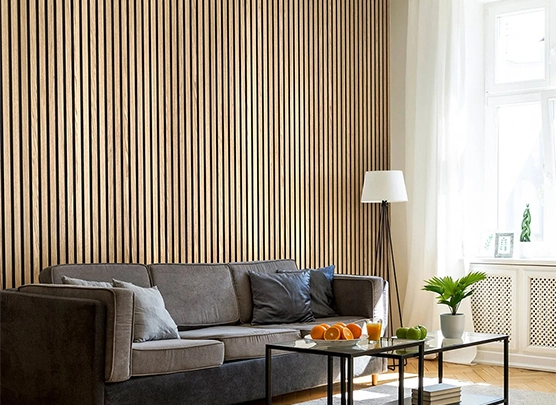
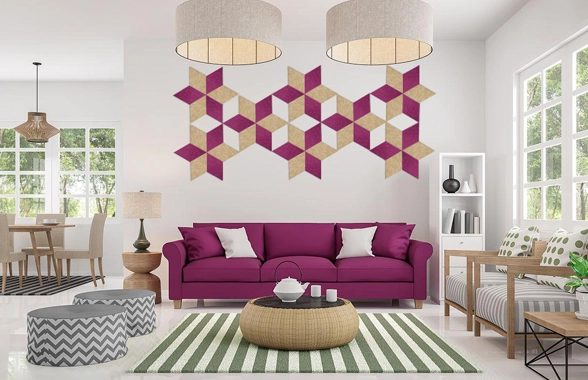
Acoustic solutions such as desk dividers, office partitions, and sound-absorbing materials help organizations achieve this balance.
As businesses continue investing in employee experience, workplace flexibility, and productivity, acoustic design will play an increasingly important role in shaping the future of work.
For architects, workplace designers, facility managers, and employers, creating acoustically comfortable environments is no longer optional. It is becoming an essential component of successful workplace strategy.