When architects, contractors, and procurement managers begin evaluating acoustic treatments for commercial spaces, one of the most common questions is whether to choose PET acoustic panels or traditional acoustic foam panels.
At first glance, both products are designed to improve sound absorption and reduce unwanted noise. However, their performance, durability, appearance, sustainability, and suitability for commercial environments can differ significantly.
For many years, acoustic foam panels were widely used in recording studios, home theaters, and small acoustic treatment projects. Today, however, commercial projects increasingly favor PET acoustic panels for offices, educational facilities, healthcare environments, hospitality projects, and public buildings.
The shift is not simply about aesthetics. It reflects changing expectations around sustainability, architectural design, fire safety, and long-term building performance.
For project teams planning commercial developments, understanding these differences is essential before making material selections.
Traditionally, acoustic materials were evaluated primarily on their ability to absorb sound.
While sound absorption remains important, today's commercial projects require much more from building materials.
Architects are expected to balance acoustic performance with visual design. Developers are under pressure to meet sustainability goals. Facility managers must consider durability and maintenance requirements. Procurement teams are focused on long-term value rather than initial material cost alone.
As a result, the decision between PET acoustic panels and acoustic foam panels often extends beyond acoustic performance itself.
The material selected must support both the functional and commercial objectives of the project.
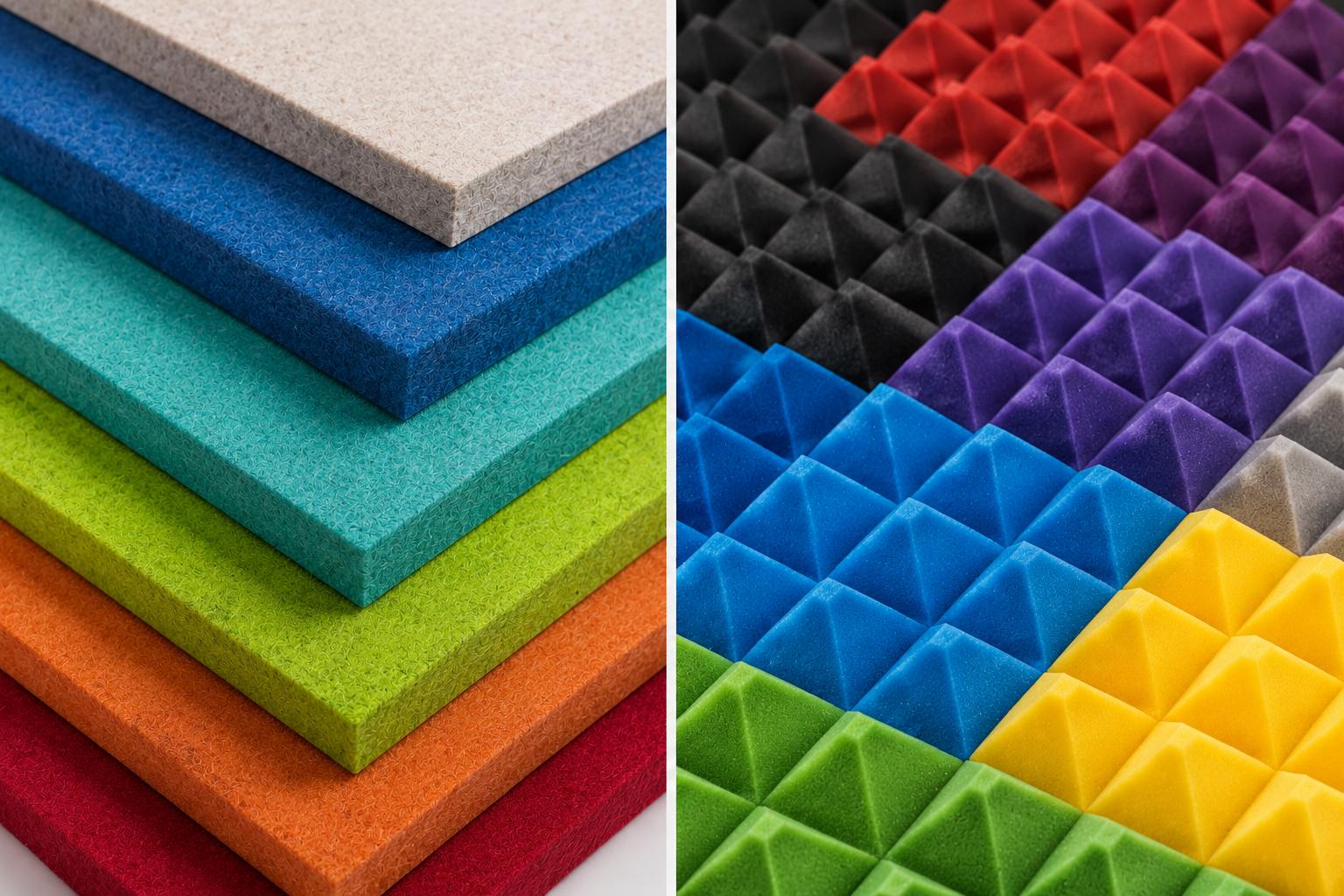
Acoustic foam panels are typically manufactured using polyurethane or melamine foam materials designed to absorb sound waves and reduce reverberation.
For decades, they have been commonly used in environments where acoustic performance is the primary concern.
Recording studios, podcast rooms, music rehearsal spaces, and home theaters are typical examples.
Their lightweight construction and relatively low cost make them attractive for small-scale acoustic treatment projects.
However, acoustic foam panels were not originally developed as architectural finishing materials. While they can perform well acoustically, they often present limitations in terms of appearance, durability, and integration within modern commercial interiors.
For projects where aesthetics and long-term performance are important considerations, these limitations become increasingly significant.
PET acoustic panels have emerged as one of the fastest-growing categories in the architectural acoustics industry.
Manufactured from compressed polyester fibers, many PET panels contain a high percentage of recycled materials, making them attractive for projects pursuing sustainability certifications and environmentally responsible building practices.
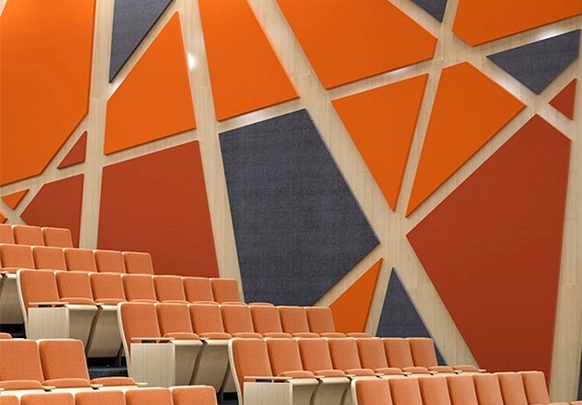
Unlike traditional acoustic foam, PET panels are designed to function as both an acoustic treatment and a finished architectural surface.
This dual-purpose capability allows designers to improve sound quality while maintaining a cohesive visual aesthetic.
The availability of custom colors, patterns, CNC-cut designs, and decorative applications has further accelerated their adoption across commercial projects.
Rather than hiding acoustic treatments behind decorative finishes, architects can now incorporate acoustic performance directly into the design language of a space.
Although both products contribute to sound absorption, they are designed for very different applications.
| Evaluation Factor | PET Acoustic Panels | Acoustic Foam Panels |
Acoustic Performance | Excellent | Excellent |
Architectural Appearance | Excellent | Limited |
Design Flexibility | High | Low |
Durability | High | Moderate |
Sustainability | High | Low |
Maintenance | Easy | Moderate |
Commercial Project Suitability | Excellent | Limited |
Customization Options | Extensive | Limited |
For many commercial environments, the decision is less about acoustic performance and more about overall project requirements.
While acoustic foam remains effective in specialized acoustic spaces, PET acoustic panels offer greater versatility for modern architectural applications.
The growing popularity of PET acoustic panels is closely linked to broader trends in commercial construction.
Today's buildings are expected to support employee well-being, sustainability objectives, and high-quality user experiences.
Open-plan offices require solutions that improve concentration without compromising design aesthetics. Educational facilities seek environments that enhance communication and learning. Healthcare projects prioritize patient comfort while maintaining strict material performance standards.
PET acoustic panels align closely with these requirements.
Their ability to combine acoustic performance, visual appeal, and environmental responsibility makes them particularly attractive for commercial developments where multiple project objectives must be achieved simultaneously.
As a result, many architects now specify PET acoustic panels during the early stages of project design rather than treating acoustics as a post-construction issue.
Environmental performance has become an increasingly important factor in construction material decisions.
Developers, architects, and building owners are under growing pressure to reduce environmental impact while meeting green building standards.
Many PET acoustic panels are manufactured using recycled polyester fibers sourced from post-consumer plastic bottles.
This not only reduces waste but also supports sustainability initiatives and green building certification programs.
In contrast, traditional acoustic foam products generally offer fewer environmental benefits and may present challenges when projects pursue sustainability-focused design strategies.
For many procurement teams, sustainability considerations now play an important role alongside cost and performance.
The answer depends largely on the project's objectives.
For recording studios, podcast rooms, and specialized acoustic environments where appearance is not a primary concern, acoustic foam panels may still provide a practical solution.
However, for offices, schools, universities, healthcare facilities, hotels, conference centers, and commercial buildings, PET acoustic panels typically offer a more balanced combination of performance, durability, and design flexibility.
Rather than viewing acoustic treatments as purely technical products, many project teams now evaluate them as architectural materials that contribute to both building performance and user experience.
This shift is one of the key reasons PET acoustic panels continue to gain market share worldwide.
Both PET acoustic panels and acoustic foam panels can improve sound absorption, but they are designed to address different project requirements.
As commercial buildings place greater emphasis on sustainability, occupant comfort, and architectural quality, PET acoustic panels are increasingly becoming the preferred solution.
Their ability to combine acoustic performance, visual appeal, durability, and environmental responsibility makes them well suited for modern commercial interiors.
For architects, designers, contractors, and procurement managers evaluating acoustic solutions, selecting the right material is not simply about reducing noise. It is about choosing a solution that supports the long-term goals of the project.
By understanding the strengths and limitations of each option, project teams can make more informed decisions and create spaces that perform better for both occupants and building owners.